Hyundai Motor Group at
World Hydrogen Expo 2025
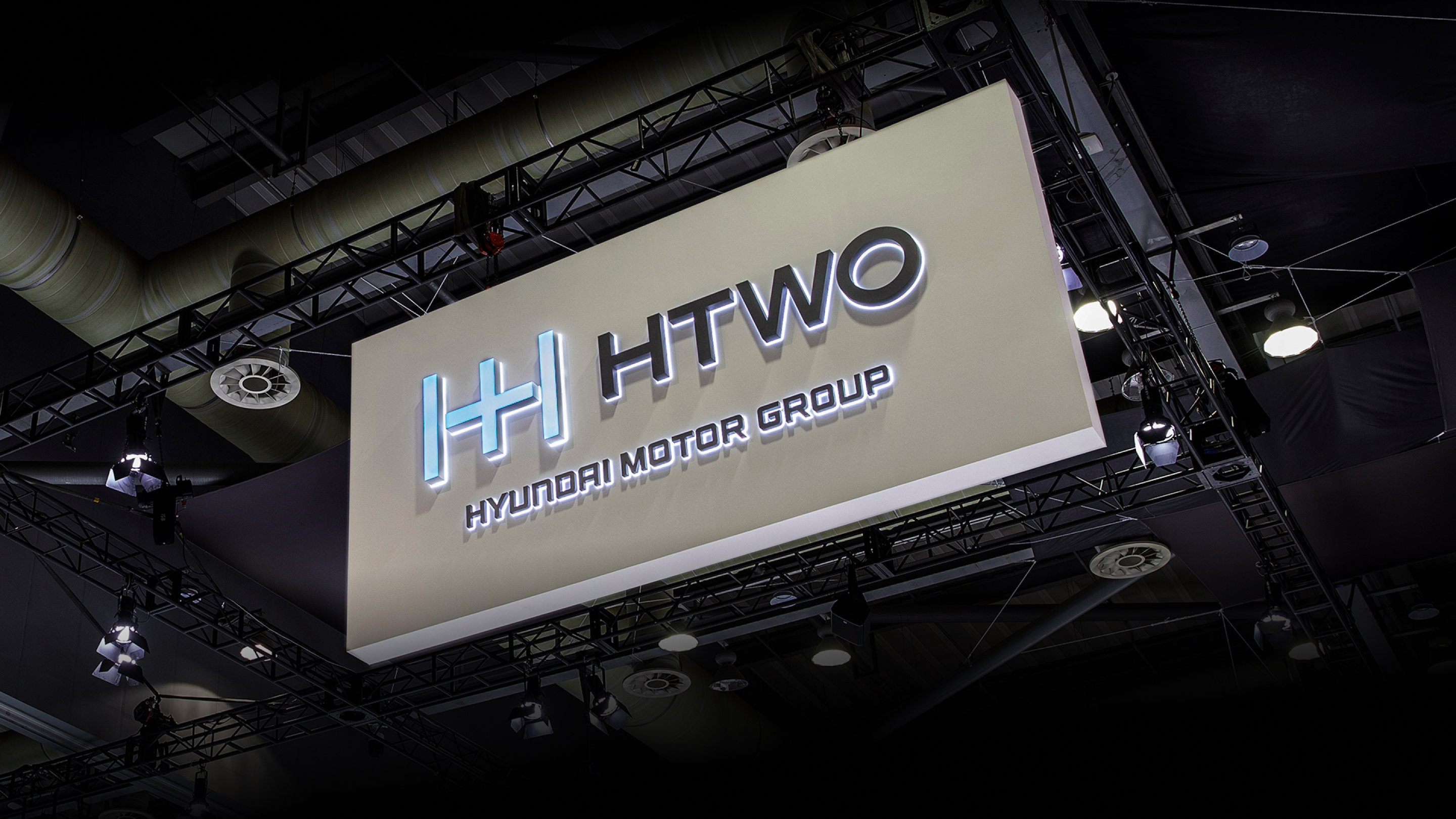
Hyundai Motor Group's hanging signage World Hydrogen Expo 2025

The World Hydrogen Expo 2025, a leading international hydrogen industry event, takes place from December 4 to 7 at KINTEX 2. Previously known as H₂ MEET, the exhibition debuts under its new name this year with the theme “Hydrogen Pioneers: Innovate, Unite, and Accelerate.” The event brings together global leaders in the hydrogen sector for in-depth discussions and collaboration to accelerate the transition to a hydrogen economy.

Hyundai Motor Group joins as the lead sponsor, showcasing a variety of hydrogen technologies and business solutions together with seven affiliates: Hyundai Motor Company, Kia, Hyundai Steel, Hyundai Engineering & Construction, Hyundai Engineering, Hyundai Glovis, and Hyundai Rotem.


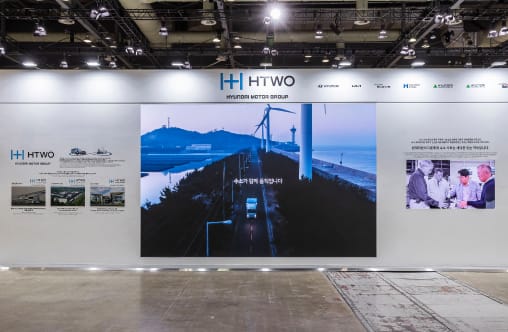
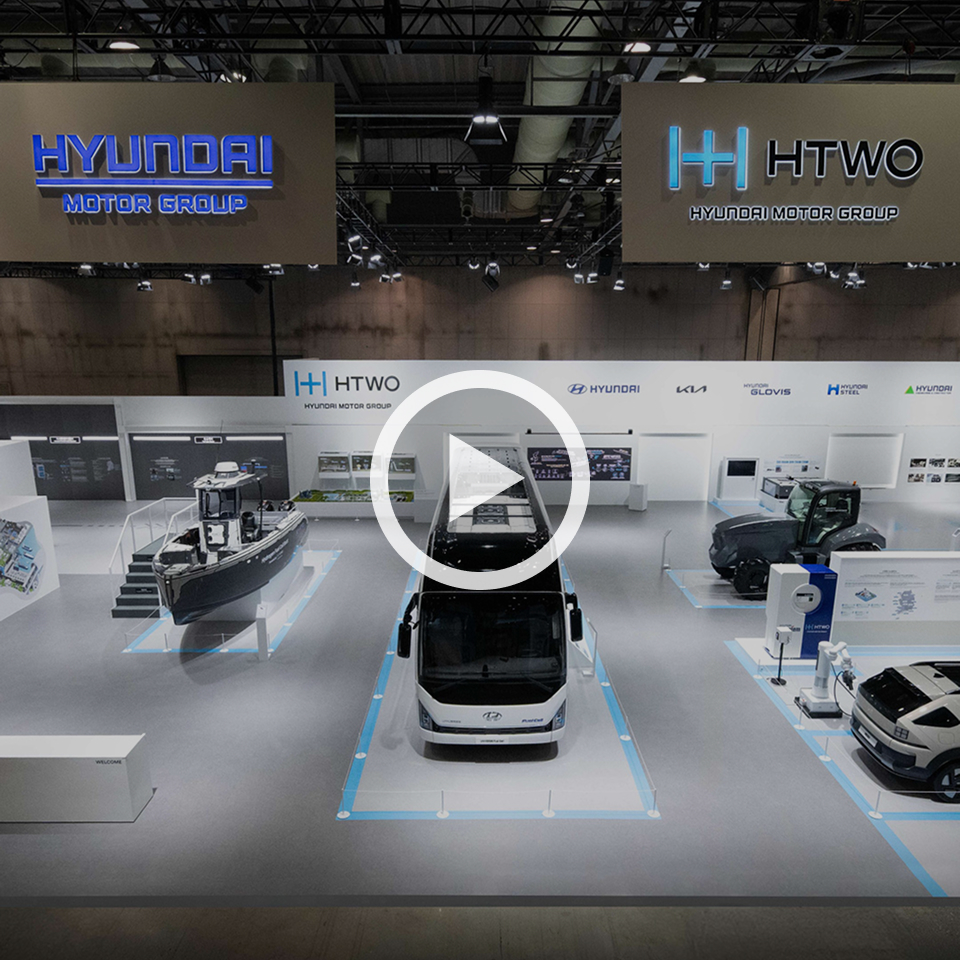
Hyundai Motor Group showcases HTWO’s hydrogen technology and business together with its seven affiliates: Hyundai Motor Company, Kia, Hyundai Steel, Hyundai E&C, Hyundai Engineering, Hyundai Glovis, and Hyundai Rotem. 1 Hyundai Motor Group showcases HTWO’s hydrogen technology and business together with its seven affiliates: Hyundai Motor Company, Kia, Hyundai Steel, Hyundai E&C, Hyundai Engineering, Hyundai Glovis, and Hyundai Rotem. 2
World Hydrogen Expo 2025 banner featuring the official slogan promoting innovation and collaboration to accelerate the transition to the hydrogen society
Hydrogen, Beyond Mobility, New Energy for Society
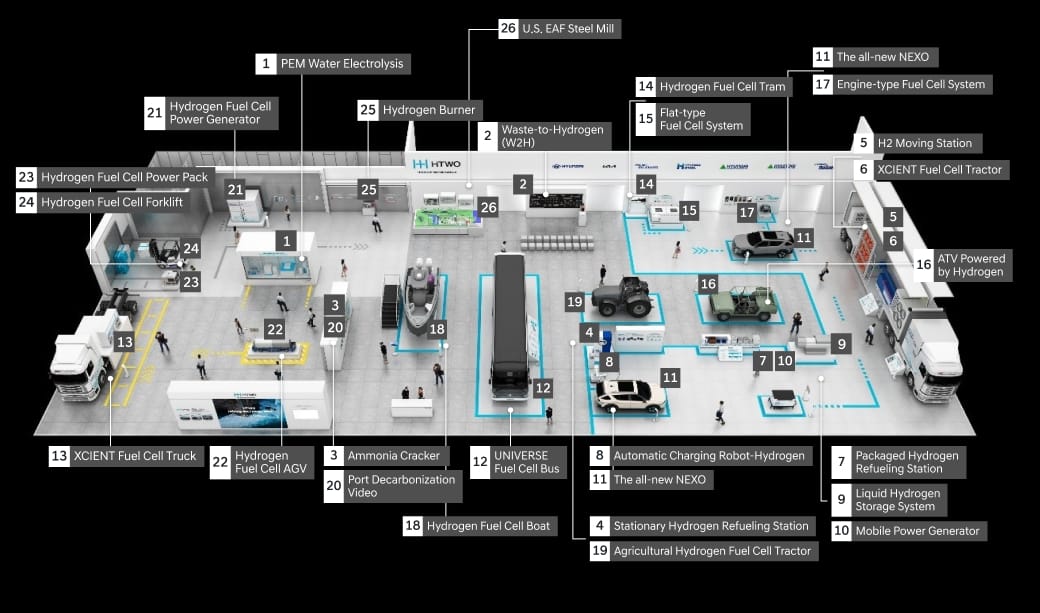
Bird’s-eye view of Hyundai Motor Group pavilion at World Hydrogen Expo 2025, featuring 26 exhibits with names and locations
Through HTWO, Hyundai’s dedicated hydrogen brand and business platform, the Group delivers end-to-end solutions across the entire hydrogen value chain. HTWO serves as an open platform for collaboration, partnership, and investment, continuously evolving and growing to drive the acceleration of a sustainable hydrogen society.

At this year’s expo, Hyundai Motor Group presents its vision of “Hydrogen, Beyond Mobility, New Energy for Society” by showcasing 26 advanced technologies, R&D achievements, and business initiatives. Visitors can experience solutions spanning hydrogen production, storage and refueling infrastructure, hydrogen mobility, and industrial applications through interactive exhibits.
Hydrogen, Beyond Mobility, New Energy for Society
Hyundai Motor Group pavilion at World Hydrogen Expo 2025 showcases its hydrogen production solutions
Hydrogen Production
Hyundai Motor Group pavilion at World Hydrogen Expo 2025 showcases its  hydrogen storage and refueling solutions
Hydrogen Storage & Refueling
Hyundai Motor Group pavilion at World Hydrogen Expo 2025 showcases its  hydrogen mobility
Hydrogen Mobility
Hyundai Motor Group pavilion at World Hydrogen Expo 2025 showcases its  hydrogen industrial application
Industry Application
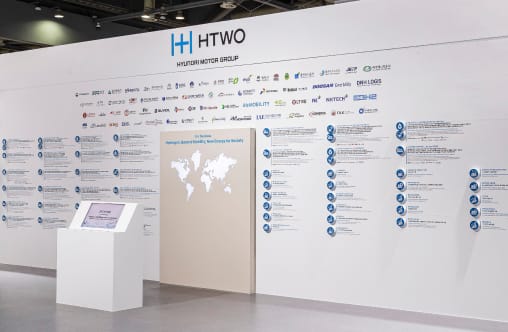
A feature wall at the entrance introduces Hyundai Motor Group’s global business footprint, along with over 65 partner companies, government agencies, municipalities, and over 30 major projects worldwide—underscoring the Group’s commitment to leading the transformation of the energy ecosystem.
Hydrogen Production:
Where Sustainable Energy Begins
Hyundai Motor Group is advancing diverse hydrogen production technologies to improve energy efficiency and support distributed power networks, strengthening energy security.
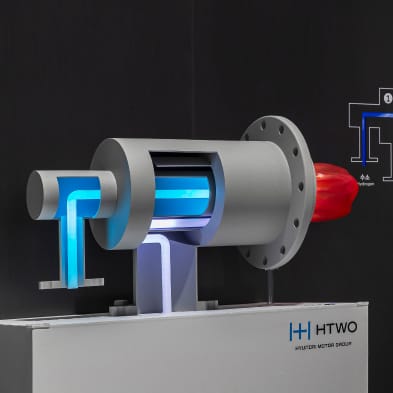
The interactive displays help visitors easily understand each technology’s process and benefits.
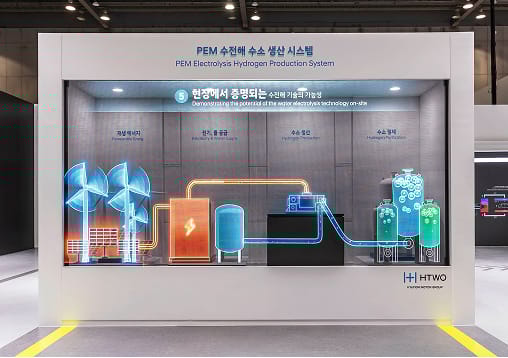
Water electrolysis produces high-purity hydrogen by splitting water using electricity. When powered by renewable energy, this process enables the production of zero-carbon hydrogen.
In particular, 1) polymer electrolyte membrane (PEM) water electrolysis leverages the reverse principle of a PEM fuel cell. Hyundai has drawn on nearly 30 years of fuel cell development expertise to standardize technology and components, achieving over 90% localization and securing a stable supply chain. Starting in 2027, Hyundai will begin local production of PEM electrolyzers at its new hydrogen fuel cell plant in Ulsan—the first of its kind in Korea.

Hyundai Engineering & Construction and Hyundai Engineering are applying their EPC capabilities to build 1MW-class electrolysis-based hydrogen production facilities in Buan and Boryeong, Korea. Meanwhile, the Group is collaborating with Jeju to develop 5MW-scale PEM electrolyzer by 2029 and plans to construct a 1GW electrolysis plant in Korea’s southwest region.
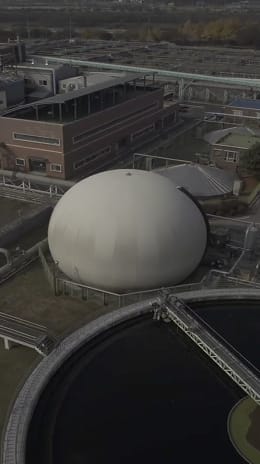
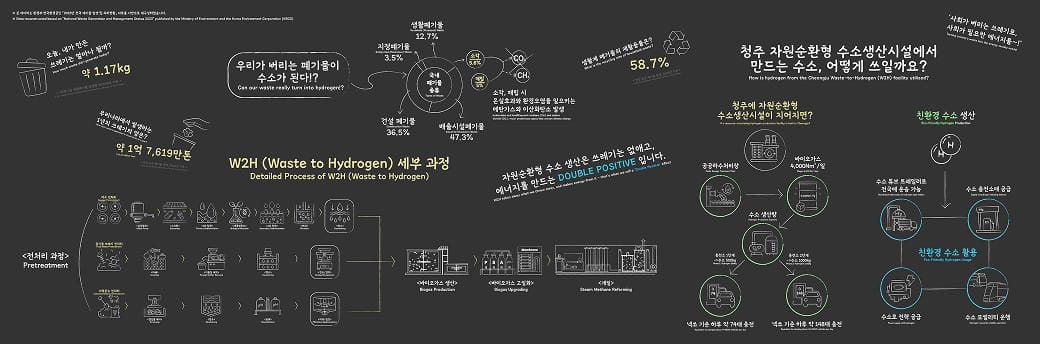
Hyundai Motor Group has developed 2) Waste-to-Hydrogen (W2H) technology, which produces clean hydrogen from organic waste such as food scraps, sewage sludge, and livestock manure. W2H converts 60 tons of food waste each day into 500 kilograms of hydrogen, sufficient to fuel about 100 NEXO vehicles (5 kg per vehicle). Building on projects in Cheongju and Paju, Korea, the Group is now driving its first international initiative in Indonesia to establish a W2H ecosystem—delivering waste reduction and clean energy together.

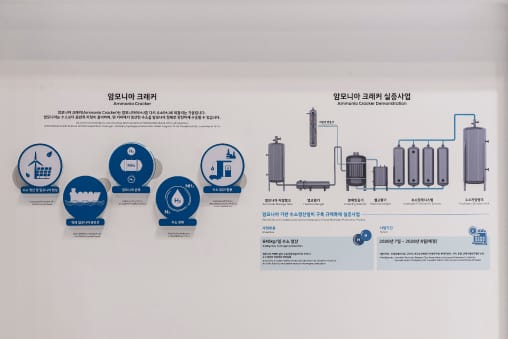
Hyundai is also developing 3) ammonia cracking technology, which extracts hydrogen by cracking liquefied ammonia near demand centers using catalysts. In partnership with Jeonbuk State, Hyundai is designing and testing a large-scale ammonia cracker capable of processing 640kg per day.
Hydrogen Storage & Refueling: Connecting the Global Energy Ecosystem
HTWO is introducing advanced refueling technologies that improve efficiency and expand hydrogen infrastructure, while sharing its vision for next-generation refueling stations.
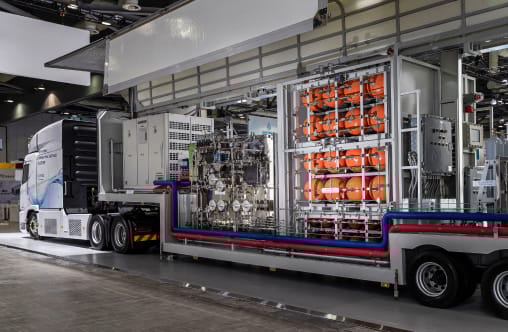
Across Korea, over 230 4) hydrogen refueling stations are in operation, and Hyundai Motor Group supplies equipment or operates nearly 30% of them through strategic partnerships. Hyundai also pioneered Korea’s first 5) mobile hydrogen refueling station, the H2 Moving Station, by mounting key equipment on a truck to minimize space requirements and enable easy relocation. One such station is currently operating in Jeju, supplying green hydrogen produced in Haengwon, Jeju. At the expo, Hyundai demonstrates its second-generation 700-bar mobile station connected to the 6) XCIENT Fuel Cell Tractor for real-world testing.
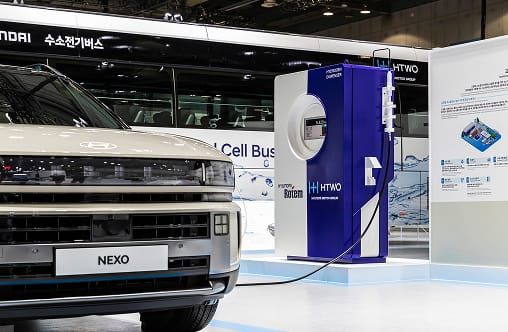
For the first time, Hyundai Rotem unveils a 7) packaged hydrogen refueling station concept designed for flexible layouts. The station can be arranged horizontally or vertically and incorporates multi-level and underground installation technologies to maximize space efficiency and enable deployment in urban environments.

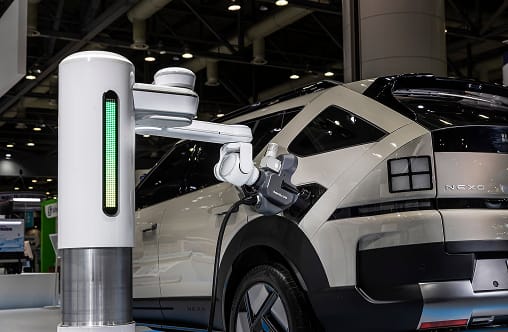
Another highlight is Hyundai Robotics Lab’s automatic refueling demonstration. The 8) Automatic Charging Robot-Hydrogen (ACR-H) precisely moves and controls the dispenser nozzle to refuel a NEXO vehicle. Hyundai Rotem’s hydrogen dispensers deliver up to 60 grams per second, dramatically reducing refueling time and improving station efficiency. Combined with robotic automation, stations can operate 24/7 without human intervention, taking efficiency to the next level.
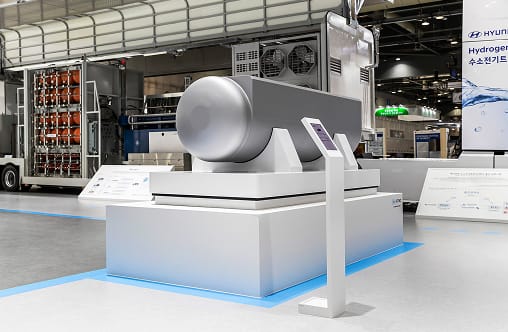
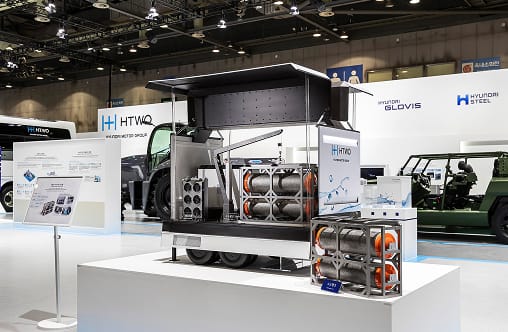
Hyundai also showcases a mock-up of its 9) liquid hydrogen storage system, designed to safely store hydrogen at -253°C. This technology enables significantly higher storage capacity within the same footprint, paving the way for large-scale energy supply. Nearby, Hyundai Rotem displays a one-third scale model of its 10) mobile power generator with a swappable hydrogen storage system. Using a cartridge-based system, pre-charged hydrogen tanks can be swapped quickly with an internal crane, minimizing downtime and improving operational flexibility.
Hydrogen Mobility: Driving the Energy Transition
Building on its core automotive expertise, Hyundai Motor Group has set numerous industry firsts in hydrogen mobility—introducing the world’s first mass-produced hydrogen fuel cell passenger car, heavy-duty truck, and both city and coach buses. At this year’s expo, visitors can meet the latest lineup all in one place.
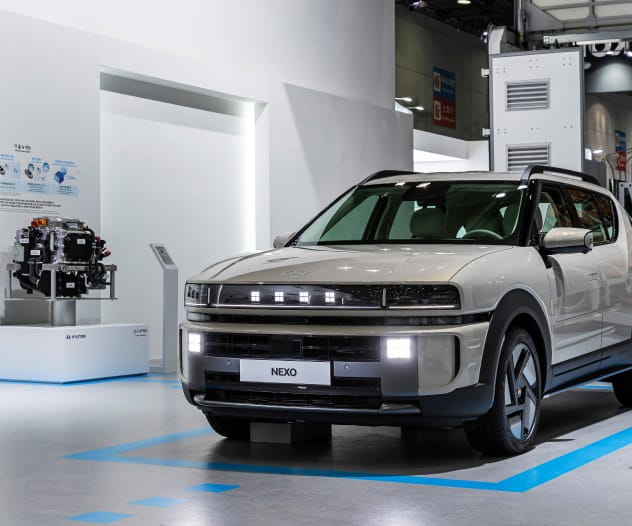
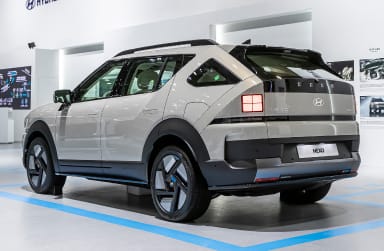
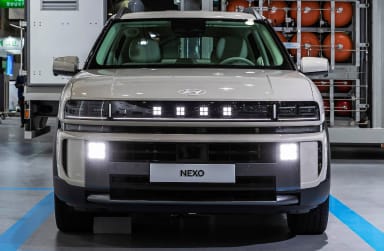
After 7 years since the launch of the first-generation NEXO, 11) the all-new NEXO delivers a driving range of up to 720 km with a refueling time of just around five minutes—a dramatic improvement over the previous model. It also features a ‘route planner’ service that provides real-time updates on the status of over 230 hydrogen stations in Korea, including availability and queue times. The model has already achieved nearly 7,000 contracts in just three months after launch, continuing the legacy of the first-generation NEXO as the world’s best-selling hydrogen-powered passenger vehicle.
Exhibit of a UNIVERSE Fuel Cell P/E model launched in August 2025, featuring an overview of its domestic deployment and key operating routes
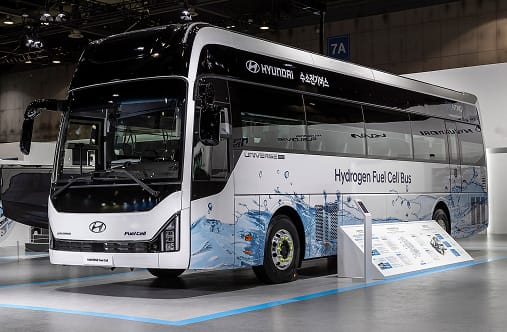
Also on display is the 12) UNIVERSE Fuel Cell, a hydrogen-powered coach, capable of traveling up to 960.4 km on a single charge. A new 12-meter Prime trim has been added to expand customer options, while performance and specifications have been enhanced.
As of late October, Hyundai has deployed over 2,600 hydrogen fuel cell buses across four countries. The transition includes airport shuttles at Incheon International Airport and partnerships with corporations, municipalities, and transit operators to accelerate hydrogen fuel cell commuter and city bus deployment. Hyundai Motor Group also plans to convert 77% of its affiliates’ commuter buses to hydrogen electric models by 2030.
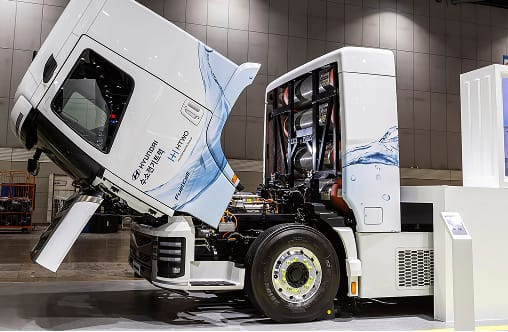
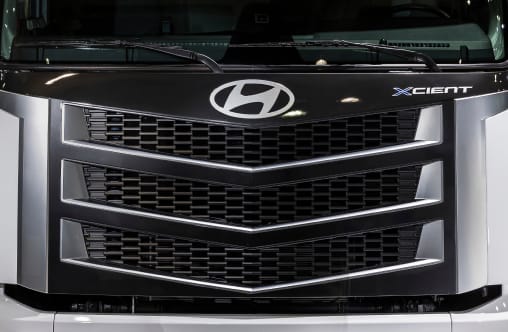
13) The XCIENT Fuel Cell Truck features a new V-shaped radiator grille design and an open-cap display that allows visitors to view the hydrogen fuel cell tanks and fuel cell system directly.

Hyundai, the world’s first automaker to mass-produce hydrogen-powered heavy-duty trucks, was selected as a supplier for California’s NorCAL ZERO project, delivering 30 XCIENT trucks to the Port of Oakland in September 2023. HTWO Logistics, a joint venture between Hyundai Motor and Hyundai Glovis America, operates 21 trucks to transport parts to Hyundai Motor Group Metaplant America (HMGMA), an EV-dedicated factory in Georgia. By linking a clean mobility production hub with zero-emission logistics, Hyundai is creating powerful synergies for a low-carbon logistics ecosystem in North America. To further strengthen this synergy, the Group is establishing HTWO Energy Savannah—a combined hydrogen and EV charging hub.
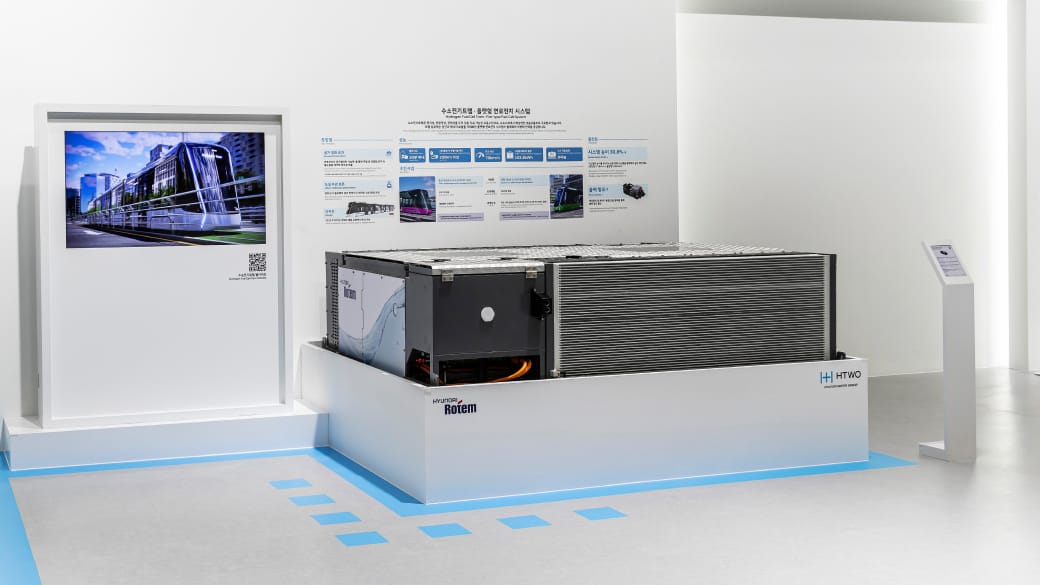
Hydrogen mobility is moving beyond roads and into urban rail systems, led by Hyundai Rotem’s 14) hydrogen fuel cell tram. This sustainable, catenary-free tram preserves cityscapes by eliminating overhead wires and is set to operate on Ulsan’s Jangsaengpo Line and Daejeon’s Line 2—soon to become the world’s longest catenary-free tram route. Mounted on top is an innovative 15) flat-type hydrogen fuel cell system that integrates cooling and control systems while reducing height by 30.8% compared to engine-type designs. This innovation positions the tram as a cornerstone of public transportation in the hydrogen society.

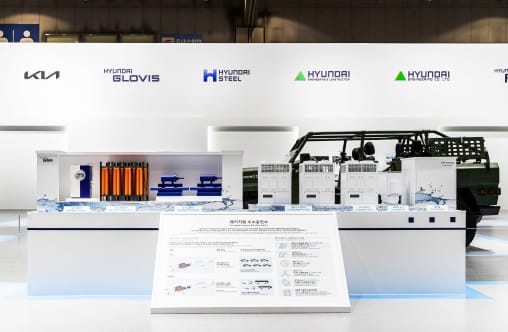
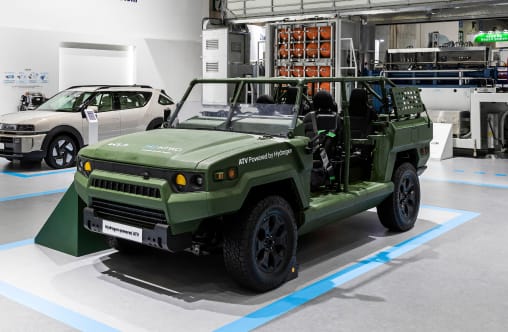
Hydrogen technology’s versatility doesn’t stop there. At the expo, Kia showcases its 16) all-terrain vehicle (ATV) powered by hydrogen. Hyundai Motor Group is combining Kia and Hyundai Rotem’s defense expertise with Hyundai Motor’s fuel cell technology and HTWO’s hydrogen value chain capabilities to develop military hydrogen mobility solutions and mobile power generators. Beyond defense, these technologies will enable microgrid development in remote areas with limited access to external power networks—supporting on-site energy generation and supply for true energy independence.
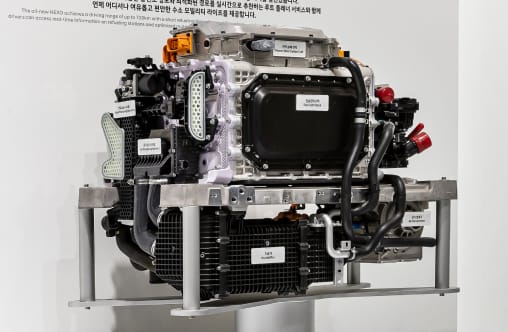
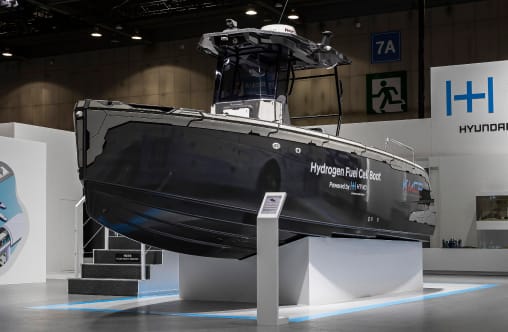
Hyundai Motor Group not only develops hydrogen mobility but also supplies proven fuel cell systems for maritime, agricultural, construction, and defense applications—driving the expansion of the hydrogen ecosystem. Backed by nearly 30 years of research and over 40,000 hydrogen vehicles in operation, Hyundai’s 17) fuel cell systems deliver clean power by converting hydrogen directly into electricity, minimizing energy loss and offering high energy density for faster refueling and longer range.
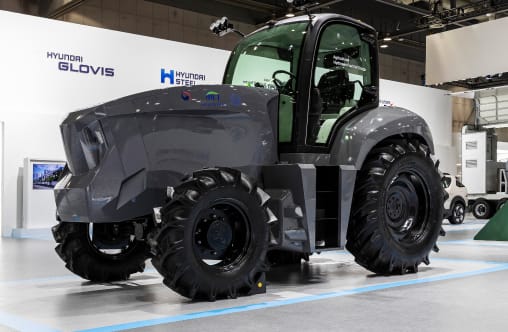
At the expo, visitors can see real-world applications, including a 18) hydrogen fuel cell boat and an 19) agricultural hydrogen fuel cell tractor, demonstrating the system’s capability for high-output, heavy-duty tasks as well as long-distance and extended operations.
Industry Application
: Expanding Hydrogen’s Reach and Creating New Demand
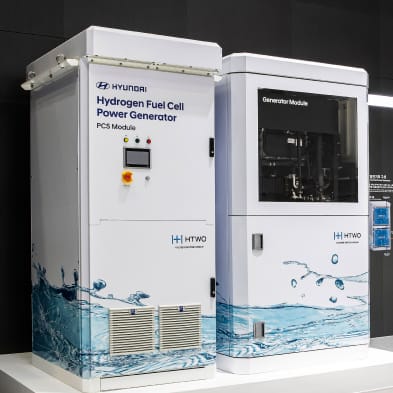
Hydrogen is moving beyond mobility and becoming a key energy carrier across industries. At this year’s expo, visitors can see how hydrogen is driving decarbonization in ports, logistics, manufacturing, and steelmaking.
Ports are major logistics hubs that remain hard-to-abate due to their heavy reliance on fossil-fuel-powered equipment. Hyundai Motor Group is expanding hydrogen infrastructure to produce and supply clean energy while replacing conventional fossil-fuel equipment with hydrogen-powered systems—helping reduce carbon emissions at ports.
21) 100 kW hydrogen fuel cell power generators, scheduled for deployment at Kia and Hyundai Glovis Pyeongtaek Port Automobile Terminal, features a modular design that allows flexible power scaling through series and parallel integration. It can supply enough electricity to power approximately 217 households for one month*.
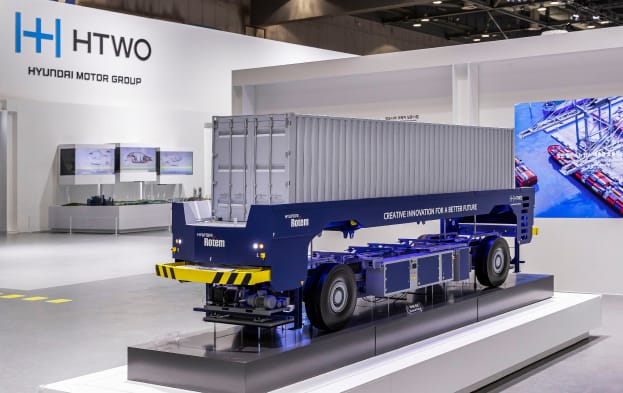
Currently, a pilot project is underway at Pyeongtaek Port using hydrogen fuel cell car transporters to move export vehicles. In the future, Hyundai Rotem’s 22) hydrogen fuel cell automated guided AGV vehicle (AGV)**—unveiled as a concept at this expo—will enable automated container transport powered by fuel cells, combining logistics automation with port decarbonization.
* Based on 92% operating rate
** an unmanned system that transports cargo along predefined routes.
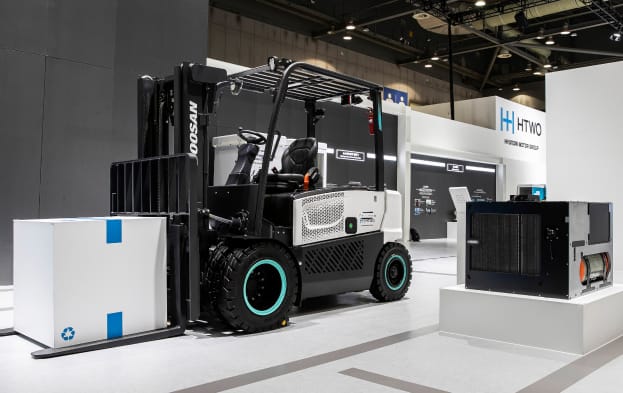
Hydrogen is also emerging as a power source for construction and industrial machinery. Hyundai Motor has partnered with global construction equipment manufacturers to develop a 23) hydrogen fuel cell power pack and a 24) hydrogen fuel cell forklift. With a refueling time of just three minutes, the forklift can operate continuously for 5-6 hours, significantly improving work efficiency. Compared to battery-electric equipment, hydrogen offers superior energy storage for heavy-duty applications. The fuel cell power pack integrates the fuel cell with key components, such as hydrogen tanks and batteries, into a single system for optimized space and simplified design. Output can be adjusted based on application, from small forklifts to large excavators.

Hydrogen is also replacing fossil fuels as a heat source for industrial burners. Hyundai Motor Group has developed 25) hydrogen burners in various capacities, starting with pilot applications in paint-drying lines at Hyundai Motor Company’s Ulsan plant, and plans to expand their use to other high-temperature manufacturing processes.
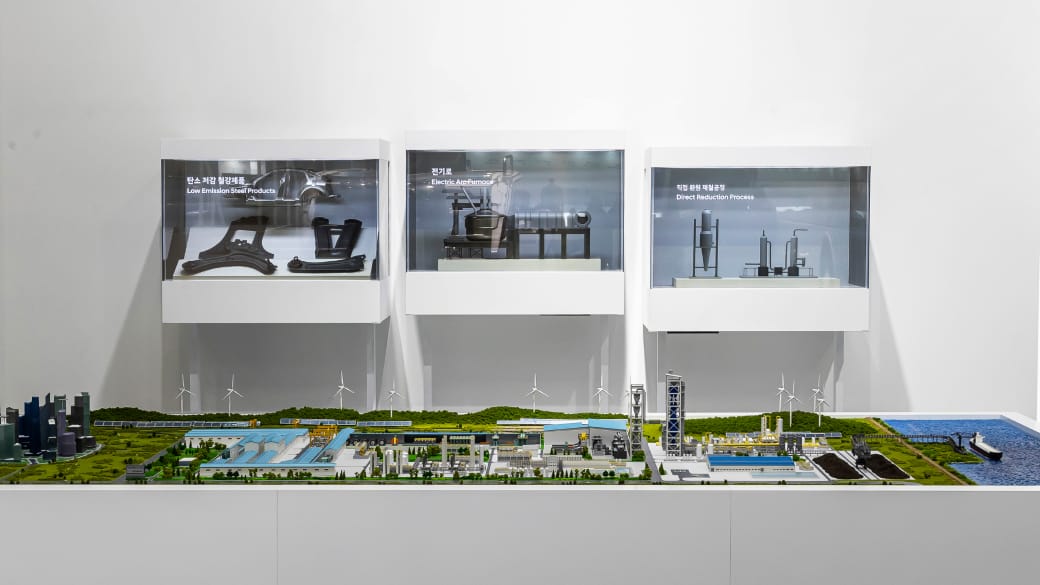
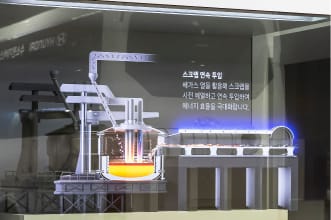
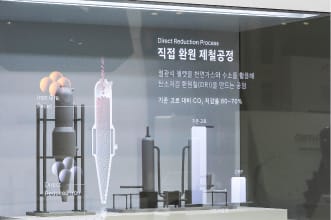
Hyundai Steel(HTWO)'s diorama illustrating its low-carbon steel manufacturing process and roadmap for emission reduction
Hyundai Steel (HTWO) U.S. electric arc furnace diorama, low-carbon steel products showcase close-up
Hyundai Steel (HTWO) U.S. electric arc furnace diorama, electric arc furnace showcase close-up
Hyundai Steel (HTWO) U.S. electric arc furnace diorama, direct reduction steelmaking showcase close-up
Finally, steel production. Hyundai Steel showcases a detailed 26) diorama illustrating its low-carbon steel manufacturing process and roadmap for emission reduction. Based on the blueprint for its U.S. electric arc furnace (EAF) steel mill, scheduled to begin operations in 2029, the display highlights technologies and facilities for hydrogen-based steelmaking and low-carbon steel production.
Hydrogen Academy
Through HTWO Innovation, Hyundai Motor Group advances hydrogen research fosters and industry-academia collaboration. The Hydrogen Academy helps visitors understand the hydrogen value chain, while master classes introduce HTWO’s business cases and strategies.

Sessions cover three key topics: Why Hydrogen?, Upstream Technologies and Business, and Hydrogen Mobility and Applications. Experts from Hyundai affiliates share insights on technology and business outlooks, including Hydrogen Demand in Europe (Hyundai Motor Europe Commercial & Hydrogen Business), PEM Electrolysis and Pilot Projects (Hyundai Engineering), and Technological Evolution of Hydrogen Rail Vehicles (Hyundai Rotem).

Special sessions feature experts from Air Liquide and Linde—members of the Hydrogen Council and business partners of Hyundai—emphasizing the importance of collaboration in building a global hydrogen ecosystem.
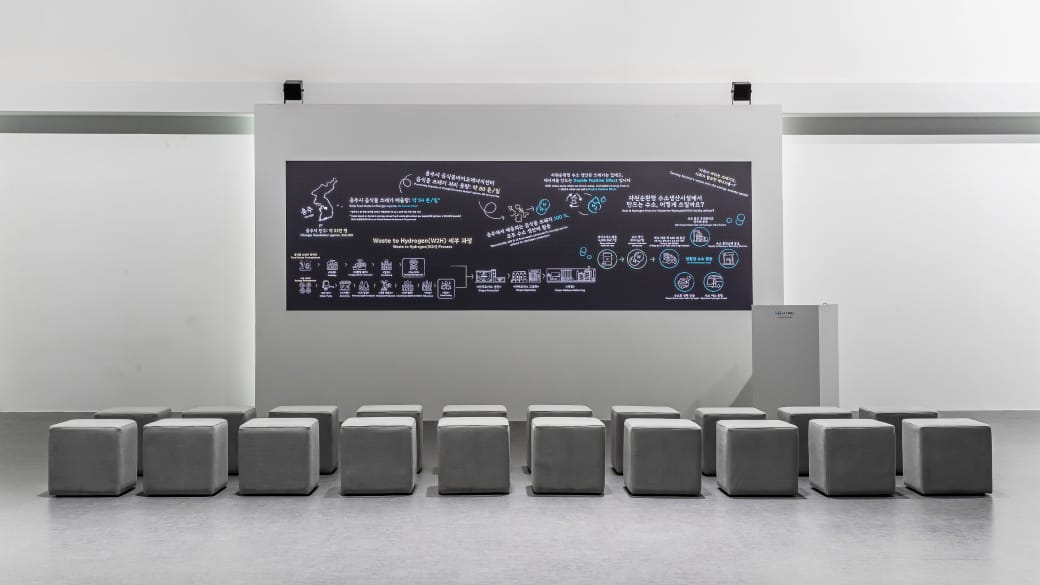
Hyundai Motor Group(HTWO)'s hydrogen academy event venue, helping visitors understand the hydrogen value chain and hosting a master class introducing HTWO’s business cases and strategies
The all-new NEXO Ride & Drive Event
At the rear of the exhibition hall, visitors can experience the all-new NEXO in a dedicated test drive event. Fifteen vehicles are available for a 15 km course, covering KINTEX Exhibition Hall 2, Jayuro, Hosuro, and back to the venue. Participants can experience the evolved design, driving performance, and spacious interior of the all-new NEXO firsthand.

월드 하이드로젠 엑스포 2025 디 올 뉴 넥쏘 시승회 신청 (PC) 월드 하이드로젠 엑스포 2025 디 올 뉴 넥쏘 시승회 신청 (모바일)

At World Hydrogen Expo 2025, Hyundai Motor Group showcases the present and future of a hydrogen-powered society through continuous innovation and strategic partnerships. Hyundai is accelerating the transition to hydrogen—transforming energy use across industries and everyday life while working closely with governments, municipalities, and partners to expand the hydrogen ecosystem.
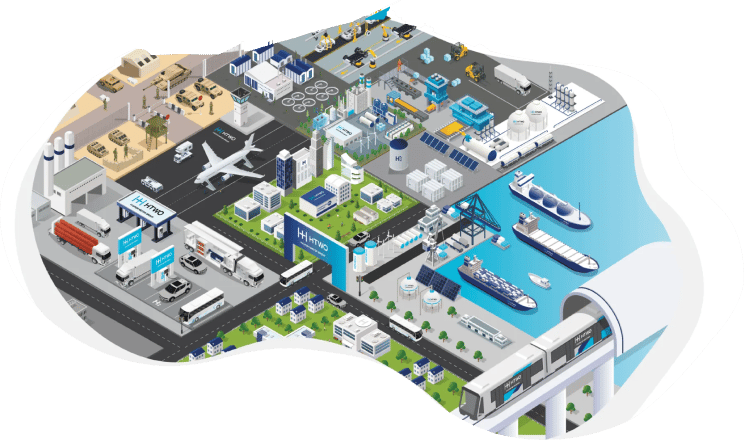
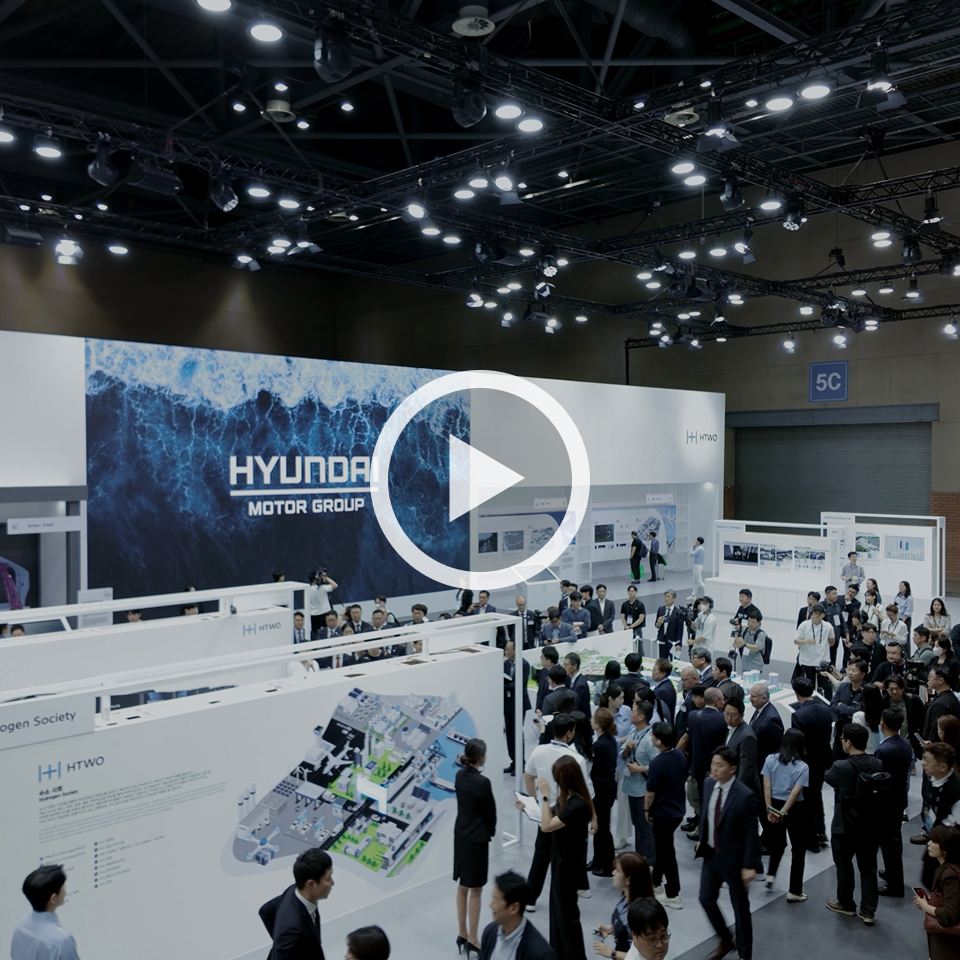
Illustration of a hydrogen ecosystem powered by HTWO solutions, connecting everyday life and industry